Local Advocates, Authorities Weigh In On Worsening Human Trafficking Crisis

Beth Ramirez loves to share her adventures as a commercial airline pilot on social media, it’s clear she’s petite with a bubbly personality, occasionally taking a side quest to be queen of the skies.
Lately, she’s been focused on Pilots Against Human Trafficking, a small grassroots movement she founded to advocate for human trafficking awareness. She regularly shares information on the group’s Instagram page (@pilotsagainstht) to encourage the public, especially colleagues in the aviation community, to keep an eye out for any potential signs of human trafficking activity.
“I personally believe it’s the most important issue in our society,” Ramirez said. “When I was younger, I got really uncomfortable comments towards me from strangers and thank God it never went further.”
Statistics from the National Center for Missing and Exploited Children (NCMEC) found a concerning trend last year, it received more than 113,500 reports of possible child sex trafficking, a 323% increase from 2024. The data also revealed that of the more than 32,000 reports of missing children to NCMEC last year, 1 in 7 were likely victims of child sex trafficking.
The National Human Trafficking Hotline saw a 28.7% increase in the number of victims identified in 2024 compared to 2023 — a total of 11,999 human trafficking cases were confirmed in 2024 and 21,865 victims were involved in these cases, according to its most recently available data.

Ramirez pointed out that pilots and travelers are in a unique position to spot warning signs given that aviation is a key method of transportation for victims of human trafficking.
“It’s all about more eyes looking for [human trafficking],” Ramirez said. “I focus on airports and aviators because of my background, but my goal is to educate anyone and everyone who travels through airports, nearly everyone. The more people involved, the more light can be shed and hopefully, the more lives can be saved.”
Various advocates, including current and former government officials of different levels, weighed in on the human trafficking crisis.
Nicole Schiff, Executive Director of the Center of Hope, the leading anti-trafficking organization in the region, said the most effective response to human trafficking involves partnerships among law enforcement, schools, healthcare providers, nonprofits, faith communities, and government agencies.
“Human trafficking is a complex issue, and no single organization can address it alone,” Schiff said in an interview.
The Center of Hope is a nonprofit organization designated by the Office of the Texas Governor as both the Care Coordination Site and Advocate Agency for Commercially Sexually Exploited Youth in El Paso County. It is the only nonprofit organization in the region solely dedicated to serving survivors of human trafficking and child sexual exploitation by providing specialized prevention, advocacy, care coordination, and survivor support services designed to promote safety, healing, and long-term stability.
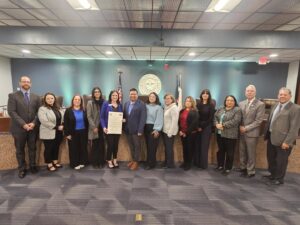
The Center of Hope noticed that community partners it has trained to recognize indicators of human trafficking are frequently identifying and referring potential victims for services, which shows that human trafficking is not a rare occurrence and remains a very real ongoing concern in the El Paso region, Schiff said.
“While it’s difficult to measure the true scope of the problem because trafficking is often hidden, unidentified and underreported, local law enforcement agencies continue to identify both labor and sex trafficking cases in our community,” Schiff said.
One of the most concerning trends is the increasing use of social media and online platforms to recruit, groom and exploit vulnerable youth in the community, according to Schiff.
“Traffickers have become increasingly sophisticated in how they build trust and manipulate victims online before exploitation occurs,” Schiff said.
According to Schiff, the Center of Hope has seen school personnel, such as teachers, being involved with youth through online platforms and in-person in a sexual nature. The team has also seen cases involving soldiers from Fort Bliss with girls under the age of 18, she said.
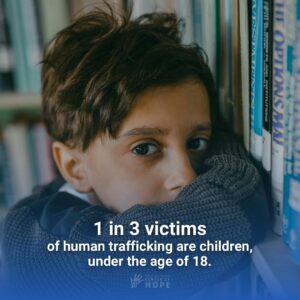
Children and adolescents are among the most vulnerable to exploitation by human traffickers, Schiff said. The Center of Hope receives approximately 50 referrals each month that are reviewed for potential trafficking concerns, the majority are youth under the age of 18, usually the average age of 14 years old, she said.
Some of the most frequently identified warning signs of a human trafficking victim include a person appearing fearful, withdrawn, or unable to speak freely without another person present, Schiff said. In cases involving youth, warning signs can include sudden behavioral changes, an older or controlling partner, multiple cell phones, unexplained gifts, or increasing social withdrawal, she added.
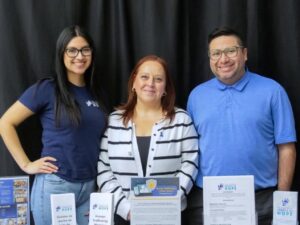
For labor trafficking, Schiff said indicators may include individuals living where they work, working excessive hours, or reporting that their documents or earnings are being withheld.
Schiff noted that it’s important to remember that no single indicator confirms trafficking, but several warning signs together may warrant concern. She also pointed out that there is also a common misconception that human trafficking is synonymous with human smuggling or always involves crossing a border, but in reality, trafficking is defined by exploitation and can occur entirely within the community, often involving U.S. citizens.
Jose Alfaro, a human trafficking survivor and board member of the Human Trafficking Legal Center, in a phone interview pointed out that there are cases where victims, ranging from children to adults, are forced by family or a partner to engage in sex trafficking.
“I think it’s really important for people to understand how common this issue is and how it’s not usually that sensational version of trafficking that we hear more times than most, like where you’re being kidnapped and you’re being taken to a different country, when in reality it’s actually more common types of situations that we probably see every single day,” Alfaro said.
Schiff added that many trafficking investigations and interventions begin because an observant teacher, healthcare provider, hotel employee, neighbor, family member, or other community member noticed something that did not seem right and acted.
Denice Miracle, a former American Airlines employee, is an example of this vigilance. She saved two young girls, ages 15 and 17, from a human trafficking attempt at the Sacramento International Airport in 2018 after she was alerted by their suspicious behavior.
The two young girls arrived at the Sacramento airport without their parents and were trying to collect tickets for a one-way flight to New York City that were purchased by the alleged trafficker who targeted one of the girls online. Miracle, who worked at the ticket counter, intervened after suspecting something was wrong.
“Their parents didn’t know where they were, and they would not have known,” Miracle said in a phone interview. “It was divine intervention and I just realized things weren’t cool with these kids. I took a moment and stopped, said this isn’t right, something’s going on, and I contacted the police.”
If the girls would’ve been able to bypass the ticket counter and obtain their boarding passes, “they would’ve disappeared,” Miracle said. It just takes people being a little curious and asking a question to potentially save a life, she added.
Schiff emphasized that a small gesture, whether it is listening without judgment, providing information about available resources, or reporting concerns to trained professionals, can create the pathway that ultimately allows a survivor to make that choice. Some of the most significant breakthroughs occur when trafficking survivors choose to engage with services, or work with law enforcement to hold traffickers accountable, Schiff said.
According to the FBI, as of July 2024, 93% of the agency’s human trafficking cases in the United States are sex trafficking and about 7% is labor trafficking, but it believes these numbers may be underreported, especially for labor trafficking.
“We’ve seen victims from low- and high-income families, we’ve been to neighborhoods all over El Paso,” an FBI official with the El Paso Field Office said in an interview. “It’s not always going to be those lower income [victims], it’s really going to be those children who are more vulnerable.”
The FBI official also mentioned that they are seeing situations where children are being trafficked or sexually exploited online.
“The perpetrators are threatening them … so those kids then feel like they have to comply, because they’re not free to leave that situation, even if it’s a mental abuse type of situation,” the FBI official said.
Kirsta Melton, CEO of the Institute to Combat Trafficking, in an emailed statement said that many of the same things that make victims vulnerable to trafficking—prior abuse, poverty, substance use, lack of immigration status, and mental health issues—make victims unable or unwilling to seek help.
“Traffickers understand this hesitancy and exploit it to silence victims,” said Melton, who previously worked on human trafficking cases for the Texas Attorney General.
Ilias Chatzis, chief of the Human Trafficking and Migrant Smuggling branch at the United Nations Office on Drugs and Crime (UNODC), said in an email interview that human trafficking is on the rise worldwide and evolving in ways that make it harder to detect and easier for traffickers to exploit vulnerable people.
The most recent data from the UNODC, according to Chatzis, revealed a sharp 25% increase compared to 2019 in victims worldwide. Women, children, migrants, and individuals living in poverty are being targeted at higher rates with 38% of globally detected trafficking victims being children, Chatzis added.According to the UNODC’s research, some trafficked girls and women were sold for as little as $36 while other investigated cases have shown that victims, whose organs have been harvested by organized groups, may receive no money at all or as little as $1,000 when their organs, in these same cases, were sold for up to $200,000 on the black market.
Poverty and economic hardship are among the key driving factors behind human trafficking, exposing vulnerable people to unstable environments that lack legal protections or community networks, Chatzis said. The crisis also thrives on a global appetite for cheap labor in industries like agriculture, construction, domestic work, manufacturing, and ongoing demand for sexual services, he added.
The FBI El Paso Field Office said businesses commonly cited for using human or sex trafficking victims include massage parlors, restaurants, salons, and strip clubs.
The Center for Hope’s Schiff warned that if someone suspects trafficking, they should not attempt to confront a suspected trafficker or conduct their own investigation. Instead, they should focus on reporting their concerns to trained professionals and law enforcement.
Community members cannot force someone to leave an exploitative situation, but they can create opportunities for connection, support, and access to resources, Schiff said, adding that lasting change often begins when a survivor feels safe enough to disclose their experience and seek help.
There’s a need to provide robust support systems for survivors, including emergency housing, mental health services, legal assistance, workforce development, and long-term case management, Schiff said.
“Survivors should have access to choices, resources, and supportive relationships that allow them to determine their own path toward healing and recovery,” Schiff said. “The goal is not simply to remove someone from exploitation, but to help them rebuild stability, regain autonomy, and achieve long-term safety.”
Schiff concluded that every resident has a role to play, and sometimes a single conversation, referral, or act of support can open the door to change.
“Human trafficking thrives in silence, isolation and control,” Schiff said. “As a community, our role is to create conditions where survivors feel supported, believed, and connected to resources. Through awareness, collaboration, and survivor-centered support, we can help individuals move from exploitation to healing and recovery.”
The public is advised to report potential trafficking to the National Human Trafficking Hotline at 888-373-7888 or by texting 233733; Department of Homeland Security law enforcement by calling the HSI Tip Line at 877-4-HSI-TIP; or local law enforcement by dialing 911 for emergency situations.