The Future of Surgery Is Here: How Robotic Surgery Is Transforming Healthcare in
When people hear the words “robotic surgery,” they often imagine a robot independently performing an operation. The reality is very different — and far more exciting.
Robotic-assisted surgery is one of the most significant advancements in modern surgical care, allowing surgeons to perform complex procedures through small incisions using highly sophisticated instruments. For patients in El Paso and the surrounding communities, this technology is helping expand access to minimally invasive surgical options that were once more commonly associated with major medical centers.
Dr. Diego Ramos-Valadez, a board-certified general surgeon specializing in robotic surgery and complex abdominal wall reconstruction at The Hospitals of Providence, is passionate about helping the community understand how these advancements can improve surgical care.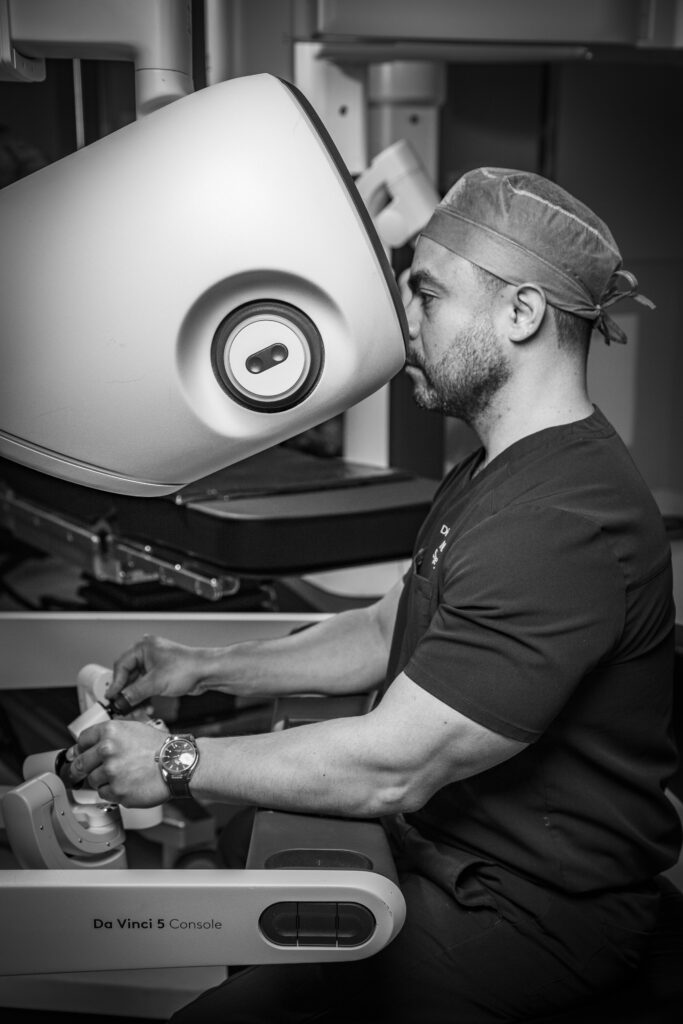
What Exactly Is Robotic Surgery?
One of the most important things patients should understand is that the robot does not perform surgery on its own.
During robotic-assisted surgery, the surgeon sits at a specialized console, controlling robotic instruments in real time. The system translates the surgeon’s hand movements into precise movements inside the patient’s body.
The technology provides magnified, three-dimensional visualization and instruments with a greater range of motion than conventional laparoscopic tools.
“Robotic surgery doesn’t replace the surgeon. It enhances our ability to perform delicate and complex procedures with greater precision,” explains Dr. Ramos-Valadez.
Depending on the procedure and the patient’s individual circumstances, potential benefits include smaller incisions, reduced postoperative pain, shorter hospital stays, fewer wound complications, and a faster return to daily activities compared with traditional open surgery.
However, robotic surgery is not necessarily the best option for every patient. The surgeon’s experience, the patient’s medical condition, and the complexity of the operation all play important roles in determining the safest and most appropriate approach.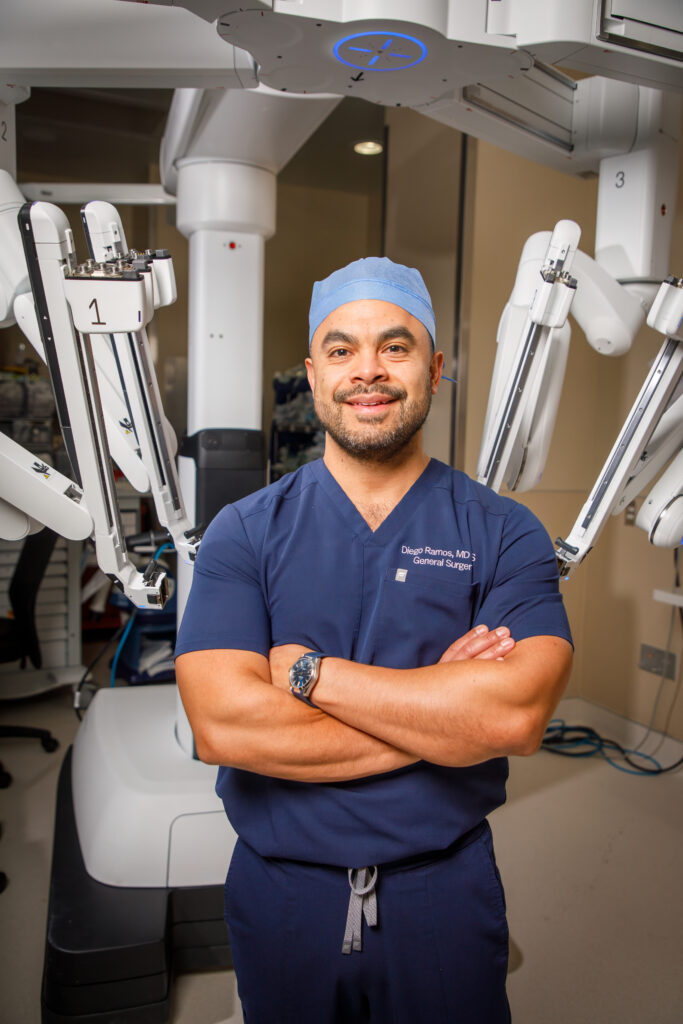
Why Does This Matter to Our Community?
El Paso is a growing, vibrant community with increasing healthcare needs. Access to advanced surgical techniques locally means patients may have more opportunities to receive specialized treatment without traveling to larger cities.
This is particularly meaningful for patients suffering from complex abdominal wall hernias.
A hernia occurs when tissue or an internal organ pushes through a weakened area of the abdominal wall. While some hernias cause minimal symptoms, others can lead to pain, discomfort, limitations in physical activity, and potentially serious complications.
Hernias do not typically resolve on their own, and symptomatic or enlarging hernias often require surgical evaluation.
Dr. Ramos-Valadez specializes in advanced robotic hernia repair and abdominal wall reconstruction, including techniques that restore the natural anatomy and function of the abdominal wall.
“Many patients believe a hernia is simply a small hole that needs to be closed. In reality, complex hernias can affect the entire abdominal wall, and successful treatment often requires reconstructing its anatomy and restoring function.”
These sophisticated procedures can help appropriately selected patients return to work, exercise, care for their families, and participate in activities that may have become difficult because of their condition.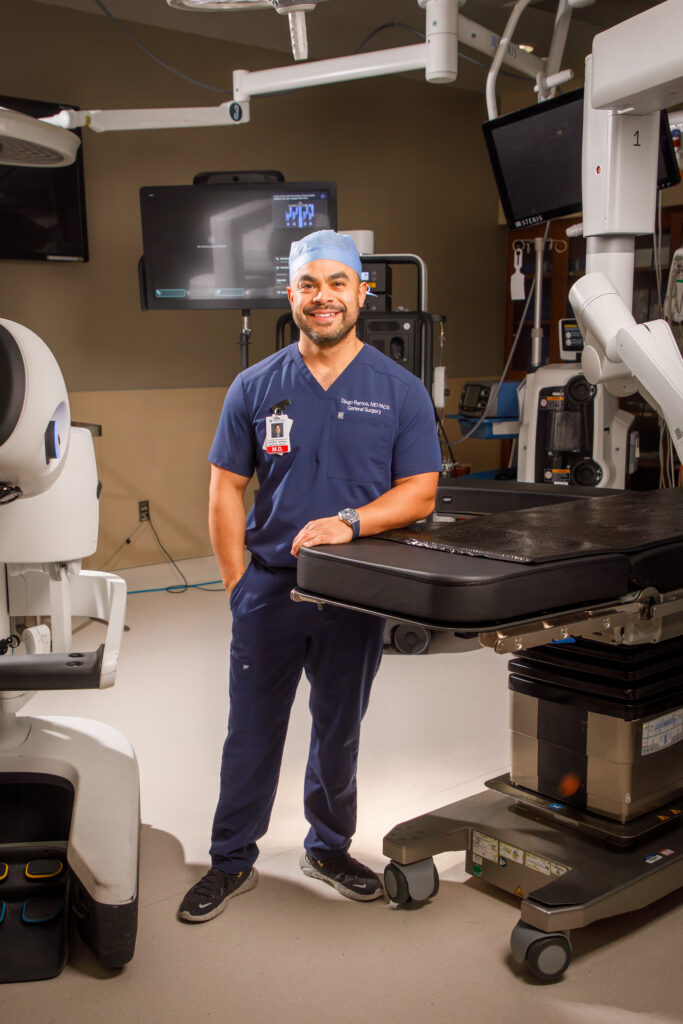
Bringing Surgical Excellence and Education to the Borderland
Beyond treating patients, Dr. Ramos-Valadez is committed to advancing surgical education and helping position El Paso as a regional center for robotic surgery.
Recognized by Surgical Review Corporation as a Master Surgeon in Robotic Surgery and Hernia Surgery, he has focused his career on developing expertise in complex minimally invasive procedures.
He also serves as a robotic surgery proctor for Intuitive Surgical, helping train other surgeons in advanced robotic techniques, and participates in surgical education with BD.
As a faculty member affiliated with Texas Tech University Health Sciences Center El Paso, he contributes to educating future physicians and surgeons.
Through surgical observation programs at The Hospitals of Providence Transmountain Campus, visiting surgeons have opportunities to learn advanced techniques and observe complex robotic procedures.
“When surgeons come to El Paso to learn, it means our community is not simply receiving new technology. We are participating in the advancement of surgery itself.”
This educational mission creates opportunities for collaboration, professional development and the continued growth of specialized surgical services in the region.
Better Surgery Begins Before the Operating Room
Despite the excitement surrounding technology, Dr. Ramos-Valadez emphasizes that successful surgery begins with patient education and prevention.
Conditions such as obesity, poorly controlled diabetes and tobacco use can increase the risk of complications and affect healing after surgery.
For patients considering elective hernia repair, optimizing nutrition, maintaining a healthy weight, controlling blood sugar and stopping smoking can significantly influence surgical outcomes.
“One of the most important conversations I have with patients is about what they can do before surgery to improve their recovery and long-term results.”
He encourages individuals experiencing persistent abdominal discomfort, a noticeable bulge or symptoms suggestive of a hernia to seek medical evaluation rather than waiting until the condition becomes more complicated.
Sudden severe pain, vomiting or a painful bulge that cannot be reduced may indicate an emergency requiring immediate medical attention.
The Future Is About People, Not Just Technology
For Dr. Ramos-Valadez, the future of surgery is not defined by increasingly sophisticated machines but by what those advancements can accomplish for patients.
His vision is to continue expanding access to advanced surgical techniques, educating patients, training surgeons, and helping the Borderland become a recognized destination for specialized surgical care.
“At the end of the day, technology is simply a tool. What matters most is helping someone recover, return to their family, and regain their quality of life.”
As robotic surgery continues to evolve, one message remains clear: The future of surgical care is not only happening in major medical centers. It is happening right here in El Paso.